

Showing posts with label Ellsworth. Show all posts
Showing posts with label Ellsworth. Show all posts
Wednesday, October 17, 2012


Friday, January 8, 2010
A question to get me back on track…
John asks: What is the deal with covering victims and mirrors with bedclothes?
Admittedly I have gone slightly off track with the original intent of the blog. Perhaps comparing other axe murders of the time to those I consider part of the Midwest Axeman’s reign interests me more than readers. So let me get back on track by addressing John’s question.
I’ll give my usual caveat: I am not a criminal profiler. The opinions expressed are mine.
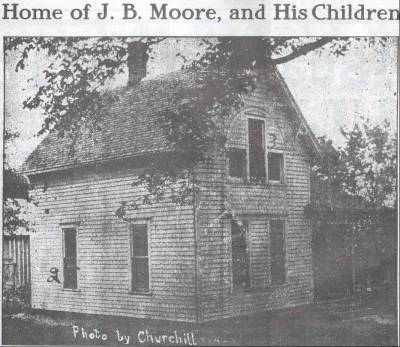 The crime scenes in which at least one victim was covered with bed sheets or clothing were: both of the crime scenes in Colorado Springs, Monmouth, Ellsworth, Mount Pleasant, Paola and Villisca. Only one crime scene had the mirrors covered, Villisca, but at Ellsworth the phone was covered. Let me address the covering of the bodies first. In some post somewhere I said this usually indicates some amount of remorse on the part of the killer, an attempt to “take it back” if you will. Psychopaths don’t care about their victims so remorse was less likely to be a reason. More likely this was a compulsion or something the killer felt he had to do. It is important to note the killer only attacked the heads of the victims, usually obliterating their facial features. This was not only a means to an end (the end being the death of the victim) but a way to depersonalize the victim. Covering the victim further insured they did not have to “see” them... or perhaps for the victim to “see” the killer.
Admittedly I have gone slightly off track with the original intent of the blog. Perhaps comparing other axe murders of the time to those I consider part of the Midwest Axeman’s reign interests me more than readers. So let me get back on track by addressing John’s question.
I’ll give my usual caveat: I am not a criminal profiler. The opinions expressed are mine.
The crime scenes in which at least one victim was covered with bed sheets or clothing were: both of the crime scenes in Colorado Springs, Monmouth, Ellsworth, Mount Pleasant, Paola and Villisca. Only one crime scene had the mirrors covered, Villisca, but at Ellsworth the phone was covered. Let me address the covering of the bodies first. In some post somewhere I said this usually indicates some amount of remorse on the part of the killer, an attempt to “take it back” if you will. Psychopaths don’t care about their victims so remorse was less likely to be a reason. More likely this was a compulsion or something the killer felt he had to do. It is important to note the killer only attacked the heads of the victims, usually obliterating their facial features. This was not only a means to an end (the end being the death of the victim) but a way to depersonalize the victim. Covering the victim further insured they did not have to “see” them... or perhaps for the victim to “see” the killer.Why cover the mirrors? Contrary to what was written at the time, covering mirrors in a house after someone has just died was common place in the United States. It was speculated the reason was due to an East European superstition about the dead seeing their reflection and becoming trapped in the house. However it has long been a Jewish tradition while sitting Shiva to have mirrors covered as well. It was also common place among the “lower” classes of England to cover mirrors and windows after a person died. I don’t think we’re looking at a simple superstition here but a psychological need being fulfilled. Investigators in Ellsworth speculated the killer covered the phone in order to muffle the sound of it ringing. This seems fairly ridiculous unless the killer had a reasonable expectation the phone might ring at one in the morning. I believe the phone was covered for the same reason the mirrors and victims were covered (dramatic pause); the eyes. 
The "eyes" of a Western Electric #317 - ca. 1909
The killer either didn’t like to be watched or didn’t want to be looked at, maybe due to a perceived (or real) physical scar or defect (since I think the killer worked for the railroad perhaps it was due to a train accident). After the killer had murdered the victims he covered windows in order to block the view of any pain in the neck witnesses then proceeded to carry out his rituals, in complete anonymity, safe from the eyes of his victims and himself.
Wednesday, March 25, 2009
Who was Charles Marzyck?
I find people interesting. I like to watch people walking down the street and try to guess their story. Where are they from; what is their job; have they ever been arrested? The primary reason I started this little blog was to talk about the other victims and players in these murders and I’d like to write a little about Charles Marzyck. The only crime I am certain Charles Marzyck ever committed was stealing wheat from James Vopat. Marzyck’s ex-wife claimed he had forged checks, written bad checks and even deserted from the army after a stint in the Philippines. He was never convicted of any of those crimes and I haven’t found anything showing service during the War in the Philippines. The primary question a researcher needs to ask is “would this suspect commit this kind of crime?” As I have said before, I’m not certain Marzyck would have. But let me give you a little background on Charles.
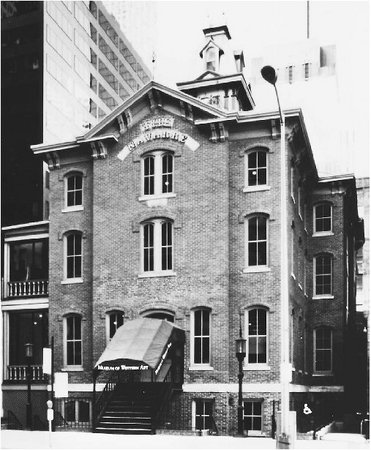 Denver Museum of Modern Art & formerly the "finest bordello in Denver"
Charles Marzyck was born in New York City around 1878. His parents were Charles and Mary and were emigrants from Bohemia (Czech Republic). Charles was one of five children in the family. He had two sisters, Julia who was about four years older, and Annie who was about four years younger as well as a younger brother, Joseph. The family lived in the Manhattan borough and his father worked as a cigar maker. Sometime between 1880 and 1885 his family moved to Denver, Colorado where Charles’ father set up a cigar making factory in the section of town now referred to as LoDo (lower downtown). When I say factory I mean a place where stuff gets made and not a large industrial building with hundreds of employees; the older Marzyck had only five employees and probably had young Charles helping around the place as well. The Marzyck’s lived on Holladay Street and this may well be important. Holladay Street was notorious as a “red light” district. Bordellos, gambling halls and saloons were everywhere. Only “high class” prostitutes operated in the bordellos but “dollar girls” roamed the streets in front of the gambling halls and theatres. At the time young Charles Marzyck was living on Holladay, it was said there were one thousand girls for a man to choose from. The Marzycks did not live in the actual area known as the red light district but they were only a few blocks away. Marzyck’s neighborhood housed mostly railroad workers.
Denver's police department was notoriously corrupt in those days and the city was so relaxed with regard to prostitution that it wasn't uncommon for a young man with some money in his pocket to head down to Holladay (later changed to Market street at the request of the Holladay family) and consort with the "fallen doves" of Denver. There is no evidence suggesting young Charles ever made that trip; not even his ex-wife was willing to accuse him of that.
In October of 1885, when Charles was eight, his father purchased a bale of Sumatra Tobacco from a man named Waggner for $279.35. Marzyck only paid half of the money but convinced Waggner to allow him to take the tobacco. Marzyck then sold the tobacco to Joseph Benesch who operated his own cigar factory. It isn’t clear what Benesch paid for the tobacco but Marzyck failed to mention to Benesch that the tobacco wasn’t completely paid for. Marzyck didn’t pay the other half to Waggner and somehow pushed the blame over to Benesch. Waggner made a complaint and the tobacco was seized by police. By the time it was over, Waggner and Benesch where both out the money they paid to Marzyck and the bale of tobacco while Marzyck got away without even a slap on the wrist. Whether this “fraud” was intentional or not is unknown.
Records of the young Charles Marzyck disappear after 1885. I don’t know when he married Minnie Kratky or where he went after his trial in Ellsworth; my guess would be Canada. Charles’ mother Mary died in 1903 in Colorado. His youngest brother Joseph married and had his own children and was still corresponding with his brother in 1911. After that, I have no idea. Perhaps someone reading can lend some information?
Wednesday, March 18, 2009
Thoughts and ruminations...
Charles Marzyck is an interesting subject. The common belief of many relatives of the Showman family is that Marzyck killed the entire family because he was secretly in love with Pauline (his sister-in-law) and she did not return the feeling. In a rage of passion he struck the entire family down and then was able to escape justice. The other theory, the one advanced by the prosecution at the trial, was this was an act of revenge on those he felt had wronged him and sent him to prison.
There are a couple of questions that come to my mind here. The first I already touched upon; why did James and Minnie Vopat not show for the trial? I am not a profiler nor am I a psychologist (and maybe I should leave it at that but...my blog, my rules) but it seems to me James and Minnie were genuinely frightened of Marzyck. I believe there was a love triangle involving Marzyck but it was between him, Minnie and James. Marzyck had been involved in a few criminal enterprises before his prison term, all non violent and all the product of a "con." Bad checks, forged checks and a possible event involving the sale of tobacco that wasn't entirely his to sell*. The crime that got him "cheesed" was stealing wheat. The victim was James Vopat. Pauline may have testified against Marzyck in that trial but Will Showman clearly felt Marzyck had been wronged somehow. While in jail awaiting the trial, Will would visit Charles and bring him tobacco and food. While in prison, Will wrote letters and petitioned for his release as well as corresponding with Marzyck. These are not the actions of a man who's wife's life had been threatened.
If Marzyck followed his previous MO then the "theft" was likely that of fraud. A bad check or possibly paying half the money owed for the full order of wheat then selling the wheat elsewhere and skipping town with the money (the scam run with the tobacco in Denver). Minnie may have had enough of her husband's dishonest ways and confessed the crime to Vopat and Sheriff Bradshaw. If this is the case then not only did Minnie betray her husband but then she married the man he had tried to swindle, a double betrayal. This explains the actions of Marzyck during the murder trial. He practically burned holes in the heads of the Vopats during their testimony. Clearly Marzyck's beef was with the Vopats and not the Showmans. But Will Showman was a good and honest man by all accounts and it's hard for me to believe he would have taken up the cause of a person he believed to be a genuine criminal. Not to get to close to tin foil hat territory but the possibility exists that Marzyck was set up by Minnie and James in order to get him out of the way of their relationship. Clearly the authorities believed a piece of evidence, the cigar cutter, was planted. Conveniently this cigar cutter was IDed by Minnie Vopat as belonging to Charles.
I must stress that I DO NOT think the Showman's were killed in order to frame Marzyck and put him away for good. So James Vopat is not a suspect and shouldn't be considered at all; neither should Minnie. But should Marzyck? While his alibi put him in Denver at the time of the Ellsworth murders, it also put him within a short train ride of Colorado Springs. If Minnie is to be believed, then Marzyck also had relatives in Monmouth, Illinois. He represented himself in a trial that if lost, would have certainly lead to his swinging from a gallows so he was level headed. If I were to find out he was a gandy dancer for a railroad I'd say he was a great suspect. But Charles was a "clever" fellow and was a good talker. His crimes relied on his ability to convince others he could be trusted and he was comfortable talking to people. His crimes were that of the lazy man; working hard to con a person out of a few bales of wheat without realizing his talent for selling ice to Eskimos. The killer of the Waynes, Burnhams, Dawsons and Showmans had no such ability. He had to attack his victims in their sleep because he wasn't confident enough to get them while they were awake. Further, Marzyck had no history of violence (although he was said to be a nasty drunk) and the life of the con man is to get the money or items and get the heck outta there. I believe Marzyck was innocent of this and the other crimes but I can't rule him out completely; he's just to tempting a character.
*Turns out this may have been his father
The trial of Charles Marzyck...
Thanks to Lisa Lindsley of Ellsworth for writing up this summary of the Marzyck trial. I will post my thoughts later today. One question I will ask right now is: why did the Vopats need to be "fetched" from Blackwolf? Surely they realized the importance of the trial and their testimony? Why did James Vopat not show? I'll ponder on that a'while and you read:
 The trial of Charles Marzyck for the murders of Will Showman, wife Pauline and their three children, Lester, Fern and Fenton, was held in the Ellsworth County Court house after his arrest in Canada in April of 1912. Mr. Marzyck had no attorney, he choose to represent himself.
The prosecution questioned Mrs. O.W. Snook first. She reported the Showman’s had been visiting at her house the evening before until around 9 pm. Mrs. Snook testified calling the Showman house many times Monday morning. Finally, she and her daughter walked the two blocks to their home around 5 pm where she found the bodies.
Next, John Herink from Wilson went on the witness stand. He spoke poor English but he said he had met Charles Marzyck many times. Herink stated he saw Charles Marzyck on the corner of Douglas and Main, Ellsworth, at 4 am on the morning of October 16, 1911. The man’s English was very broken and the Judge had to quiet the crowd in the courtroom often as disarray broke out as everyone was trying to understand Herink’s words.
James Vopat, the man married to Marzyck’s ex-wife, was called to the stand next. He and his wife had not come to court that day. James was fetched from Blackwolf and he and his wife, Minnie arrived at the courthouse soon after. Marzyck stared at James during his testimony. His eyes only once turned to his ex-wife once when she identified a cigar cutter said to belong to Charles Marzyck. The cigar cutter was alleged to be found in the Showman’s house.
James spoke of the threats Charles Marzyck had made to the Showman’s while under the influence of the bottle. Marzyck prior arrest for stealing wheat from James Vopat was brought up. Also mentioned were his open remarks at that hearing to claim revenge on his ex-wife Minnie and sheriff Bradshaw who arrested him for that stealing charge. At the previous hearing, it was noted that both Minnie Vopat and her sister Pauline Showman testified against Charles Marzyck. However it was also noted that Will Showman had written to Marzyck while he was in prison and even petitioned for his release. The threats made to the Will Showman family didn’t seem comprehensible but James as well as others had personally heard the threats from Charles Marzyck’s mouth.
Sheriff Bradshaw took the stand next and testified that on the night of the murder, he had heard noises at his back door. After he heard the noise a couple of times he went to the back door but did not see anyone. The next morning, he did see that the screen to his back window had been partly removed as if someone had attempted to break into his house.
Then Charles Marzyck took the stand in his own defense. The prosecutor took great care in trying to trip up his alibi. Charles was clever and was very clear about the places he had worked and stayed while in Colorado during October, 1911. His probable residence in Colorado during the murders took him far away from Ellsworth.
At the conclusion of the trial, John Herink’s testimony was taken lightly. He had such broken English, he wasn’t completely understood. The Judge also ruled that at 4 am with no street lamp it would be difficult to identify a man on the street.
The cigar cutter being found at the Showman’s house was not allowed as evidence as the authorities suspected it was planted. It was stated that the cigar cutter was not turned into authorities until two weeks after the murders. Charles Marzyck had what seemed to be an iron clad alibi. In the end, there was not enough evidence to convict Charles Marzyck and he was found “not guilty” and released. After the hearing many spoke of how Charles Marzyck had always been a clever man. He was generally a respectable man but when he took to the bottle he did become rather vile. Many speculated that he had been cleverest in his career to come out of the trail with an acquittal.
Since his arrest and time in prison at Lansing, KS, Charles Marzyck had been charged both in Colorado and Missouri for writing bad checks and forgery. He was even arrested and held in jail in Missouri; however he was released on some small technicality.
Looking back know, one wonders if John Herink was the link that should of put Marzyck behind bars. Another point never stated was if Marzyck’s alibi in Colorado was ever checked out by authorities. Was his employer in Colorado contacted as well as the hotels he frequented?
The ax murders of the Showman family remain unsolved. A private investigation report in April 1917 implicated others but no arrests were ever made partially because the majority believed Charles Marzyck really did commit the crime. Today, the ax murders are referred to as” Hatchet” around Ellsworth and most citizens only have a slight knowledge of the crime which for the most part it is forgotten. The identification of the murderer was buried long ago, along with the memory of Will Showman and his family.
More to come...
Wednesday, March 11, 2009
A suspect...
 If you read any of the articles on the Millers Paranormal website then you know of two of the suspects in the Showman murder. One was a John Smitherton or Smithson or Smith who was passing through on his way to Kanopolis looking for work in the salt mine there. The other was Charles Marzyck, ex husband of Minnie Vopat (Pauline Showman’s sister) and one time wheat thief and forger. Marzyck was the only suspect ever put on trial for the Showman murders and in short was acquitted of the crime. The Ellsworth County Independent published an article about the Showman murders in July of 2008. It is a good rundown of the motive Marzyck may have had for killing the Showman family. The article’s author, Lisa Lindsley has kindly written up a summery of Marzyck’s trial which I will post soon. Marzyck is an intriguing character and I have actually been researching him for a while. There are a couple things we know about Marzyck that makes him a least an interesting suspect. First he lived in Colorado at one time and was reported (indeed it was his alibi) to be living in Colorado in 1911. His brother lived in Denver and it is quite likely Charles lived with his brother and when he and Minnie were married they lived in Colorado where Charles had written some bad checks and forged some other checks. Second, Marzyck had been heard by several witnesses to make threats against those who had helped send him to prison for the wheat theft. Pauline had testified along with her sister in that trial. So he can be placed within a train ride of Colorado Springs in 1911 and made threats of violent retribution towards (in a general way) Pauline Showman. Minnie Vopat also believed Marzyck had relatives in Monmouth, Illinois but that might have been a fib.
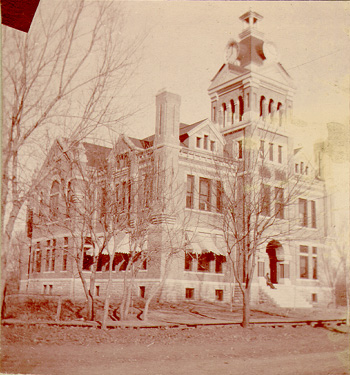 Ellsworth County Courthouse - 1908
Was the Showman family massacred out of revenge? Was it a crime of passion incited by the unrequited love of Pauline Showman? The descendents and relatives of both Marzyck and the Showmans don’t like to talk about the crime. Those on the Showman side generally believe Marzyck was a killer regardless of the verdict of the trial. I’ll discuss a bit more about Charles Marzyck and my own opinion after I post Lisa’s trial summery.
Tuesday, March 3, 2009
From the comments...
Sherri in comments asks a good question that I haven’t really addressed: Why not Rev. Lyn Kelly? Any of you who have read about the Villisca crime know who Lyn Kelly was and those of you who don’t need to get over the Villisca Axe Murders blog and study. In brief, Lyn Kelly was a tiny, weird little preacher who was in Villisca on the night of the murders. Rev. Kelly was absolutely howl-at-the-moon crazy and had a bit of a peeper’s fetish. He’d been busted in one town for peeking in a window, arrested in another town for trying to hire a young lady to type and pose nude for him and in another town had cornered a young girl and spent the better part of an hour trying to talk her into undressing for him. His relationship with his wife was more like that of a mother and it is believed the two never consummated the marriage. But was Kelly a psychopath?
Looking at two of the crime scenes you can draw a few conclusions without needing to be a trained profiler. In Colorado Springs the killer acted strangely. Think Jack the Ripper on the night known as the double event. A run-of-the mill breaking and entering crime gone wrong would have the killer fleeing the scene after the first murder and getting away as fast as possible. Instead the unsub went to the neighbors’ house and killed them as well. The risk involved was substantial with houses all around the area, trolleys clanging down the street and men walking to work. Absolute calm had to be maintained through all of it. In Ellsworth, while the chance of discovery wasn’t as great, it was still there. The killer apparently made an attempt to break into another house but was interrupted by the owner (in this case it was Marshall Merritt) but this near brush with discovery did not dissuade the killer at all. With Bill Miller’s axe in hand, the killer walked south among other houses for quite some distance until he came to the Showman house. If the bloodhound trail was accurate, he hid in some bushes behind the house in order to observe. After he killed the family he washed his hands, wiped the axe down and posed Pauline. He then stepped out the front door, hopped a train and left town. In order to do this there had to be an escape strategy other wise the entire getaway would have been based on whether or not a train was passing by. Did he wait inside the house until a train came or did he lounge on the front porch? Or did he have an idea of how long to stay inside before hopping the train?
Judging by the way Kelly reacted while in jail and during the trial it is clear he couldn’t handle high pressure situations. He shrank in his chair during the trial and while he had some peculiarities with regard to children it seems he just didn’t have the nerves required to break into a house without waking anyone, kill the occupants without waking anyone and then escape unnoticed through town. Now Dr. Epperly knows a lot more about Rev. Kelly than I do and I look forward to reading the upcoming book once it comes out but based on what I know I just can’t see Lyn Kelly as being able to pull any of this off.
Looking at two of the crime scenes you can draw a few conclusions without needing to be a trained profiler. In Colorado Springs the killer acted strangely. Think Jack the Ripper on the night known as the double event. A run-of-the mill breaking and entering crime gone wrong would have the killer fleeing the scene after the first murder and getting away as fast as possible. Instead the unsub went to the neighbors’ house and killed them as well. The risk involved was substantial with houses all around the area, trolleys clanging down the street and men walking to work. Absolute calm had to be maintained through all of it. In Ellsworth, while the chance of discovery wasn’t as great, it was still there. The killer apparently made an attempt to break into another house but was interrupted by the owner (in this case it was Marshall Merritt) but this near brush with discovery did not dissuade the killer at all. With Bill Miller’s axe in hand, the killer walked south among other houses for quite some distance until he came to the Showman house. If the bloodhound trail was accurate, he hid in some bushes behind the house in order to observe. After he killed the family he washed his hands, wiped the axe down and posed Pauline. He then stepped out the front door, hopped a train and left town. In order to do this there had to be an escape strategy other wise the entire getaway would have been based on whether or not a train was passing by. Did he wait inside the house until a train came or did he lounge on the front porch? Or did he have an idea of how long to stay inside before hopping the train?
Judging by the way Kelly reacted while in jail and during the trial it is clear he couldn’t handle high pressure situations. He shrank in his chair during the trial and while he had some peculiarities with regard to children it seems he just didn’t have the nerves required to break into a house without waking anyone, kill the occupants without waking anyone and then escape unnoticed through town. Now Dr. Epperly knows a lot more about Rev. Kelly than I do and I look forward to reading the upcoming book once it comes out but based on what I know I just can’t see Lyn Kelly as being able to pull any of this off.
Tuesday, February 10, 2009
Entering Hatchet, part II...
At last I've tweaked my video walkthrough of the Showman house to the point I'm happy...not satisfied, but happy. Points of contention; pretty certain the sink is placed wrong and the location of the phone is in doubt. I've explained my reasoning for the demensions of the house so I won't rehash that. I placed the phone in the front room for one reason, the killer covered it with a dress belonging to Pauline. Investigators believed this was to muffle the ring in case anyone called so the assumption is the phone was in the same room the family slept in. I don't think this is the reason he covered the phone but I'll write about that later. Incidently, the axe on the outside of the house, near the back door where the killer entered, was Will Showman's axe and was untouched. I'll be talking about suspects next...till next time, enjoy the film.
Friday, January 23, 2009
Entering "Hatchet"...
 The old Showman house is gone but the place where it once stood is known to residents as “Hatchet.” Sheriff R. W. Bradshaw and town marshal Merritt speculated the killer must have had some knowledge of the house. A later investigation by The Whitsett National Detective agency out of Kansas City believed this as well but why would this be the case? The house was typical for its time; a two room house that was originally a one room house with a lean-to addition tacked onto the back. The house extended to the back of the hill it sat on with a concrete foundation laid to support the addition. The house itself was about 15 feet wide by 16 feet long (18’ by 18’ at best) and the two rooms were separated by a wall with a door about the middle of the room. On the door was a bracket on which hung an oil lamp. The bracket could be swung in either direction in order to cast light into the front room, the kitchen or both. It was this lamp that was used by the killer and found at the foot of Will and Pauline’s bed.
 Author's representation of the house
In the front room, where the family slept, two beds were arranged side by side at one end of the room. In the picture above, the beds sat on either side of the double hung window facing the camera. In this layout, the sleeping area would have been incredibly cramped and allowed a maximum of two and a half feet of floor space between the two beds (based on a standard size of three and a half feet wide beds). Investigators felt the light thrown from a chimneyless lamp would have been too dim for the killer to have committed the crimes in such cramped space without prior knowledge of the house. The confined space could also account for Pauline waking up as the killer might have swung the axe across her body at a diagonal from the foot toward the head of the bed but that is only speculation. I arrived at the measurements in two ways; first by using the intuition of Google Sketchup's Photomatch feature and second using the double hung window as a scale. Sketchup measured the house to be 15' by 17' while the window measured it to be 18' by 18' (based on a standard width of 29"). The 3D model I created measures 16' by 17', 6". Either way the front room measures just over nine feet wide in order to accomodate the beds being arranged the way they were.
Monday, January 12, 2009
More on the family and the crime scene...
Will Showman was the youngest son of David and Sarah Showman. David was a veteran of the Civil War and served in Company H of the Maryland Volunteers. He moved his family to Ellsworth County sometime between 1872 and 1880 and took a job as a mail carrier. David died in April of 1898. Pauline Kratky was the youngest daughter of John and Theressia and was born in Ellsworth County around 1884. John and Theressia had emigrated from Bohemia (now the Czech Republic) and were part of a burgeoning Bohemian culture establishing itself in the area. The influence of this culture is seen every July when the town of Wilson holds its annual Czech Festival. Will and Pauline were married around 1904 and had three children; Lester, Fern and Fenton. At the time of his death Will Showman was a chauffeur which didn’t pay too much especially in a rural town like Ellsworth. The family was regularly seen at church and Will was an active member in good standing with the local Redmen Lodge. Will was reported to have a kind heart. His former brother in law had been arrested a few years earlier and Will would visit him and bring tobacco and food while he was at the Ellsworth County jail.
As many of you probably read before, it was Laurie Snook who discovered the crime around five o’clock in the afternoon on October 16th, 1911. I have been debating with myself over how much detail on the crime scene to write about since it could very easily cross over into tabloid territory so I’ll give a few generalizations. Will and Pauline’s bed sat in a corner with Will positioned on the inside against the wall. Pauline was on the outside and two-year old Fenton was between his parents. Will was killed first without ever waking but Pauline woke up. She attempted to fend off the attack and in the struggle woke up the children. The children were all killed while sitting up. A bucket of bloody water was found in the kitchen as well as a blood stained piece of cloth. The killer used the water and the cloth to clean off his hands and the blade of the axe. He took a dress belonging to Pauline and hung it over the phone in the kitchen. He pulled the covers up over Will leaving only the top of his head exposed. He leaned the axe against the wall behind the door between the kitchen and the front room. He went about his macabre work by the low light of a coal oil lamp absent its glass chimney. The chimney was found, depending on the source, either under the foot of the bed or under a chair in the kitchen. The lamp was placed at the foot of Will and Pauline’s bed and left to burn out. Out of respect for family members who may be reading or may come across this post I will only say that Pauline was posed by the killer before leaving the scene.
As many of you probably read before, it was Laurie Snook who discovered the crime around five o’clock in the afternoon on October 16th, 1911. I have been debating with myself over how much detail on the crime scene to write about since it could very easily cross over into tabloid territory so I’ll give a few generalizations. Will and Pauline’s bed sat in a corner with Will positioned on the inside against the wall. Pauline was on the outside and two-year old Fenton was between his parents. Will was killed first without ever waking but Pauline woke up. She attempted to fend off the attack and in the struggle woke up the children. The children were all killed while sitting up. A bucket of bloody water was found in the kitchen as well as a blood stained piece of cloth. The killer used the water and the cloth to clean off his hands and the blade of the axe. He took a dress belonging to Pauline and hung it over the phone in the kitchen. He pulled the covers up over Will leaving only the top of his head exposed. He leaned the axe against the wall behind the door between the kitchen and the front room. He went about his macabre work by the low light of a coal oil lamp absent its glass chimney. The chimney was found, depending on the source, either under the foot of the bed or under a chair in the kitchen. The lamp was placed at the foot of Will and Pauline’s bed and left to burn out. Out of respect for family members who may be reading or may come across this post I will only say that Pauline was posed by the killer before leaving the scene.
Monday, January 5, 2009
"Ellsworth the wickedest..."

Will Showman
In the former cattle town of Ellsworth, Kansas, Will Showman and his family were visiting the home of W. O. Snook on Sunday, October 15, 1911. Mr. Snook worked nights and usually slept during the day so Laurie Snook was glad for the company in the evenings. Around nine o’clock, Will and his family said good night and walked the two blocks back to their house. The Showman's had lived in their little house for about four years. Will had purchased the property from the county after the previous owners had failed to pay the taxes on the house. It sat perched on a small hill overlooking the railroad tracks which were just a few feet from the front door. The house was originally a one room shack but at some point had been expanded with a lean-to addition on the back where the kitchen was located. The family slept in the front room with beds on both sides of the house. Just to the north of the Showman home lived Bill Miller and his family. In his front yard, embedded in a tree stump, was his axe. A few days before, Miller and some friends had a competition to see which of them could drive the axe head the deepest into the stump. Fred Boyer took the honors after driving it in so deeply the men had to use another axe to remove it, chipping the blade in the process. A few houses away lived the Ellsworth town marshal; his name was Merritt but I have never located a first name. Merritt was sitting in his front room reading when he heard a peculiar noise coming from the back room. It sounded as if an animal were scratching at the back door. The noise stopped and Merritt went back to his reading. The noise began again and this time the marshal decided to investigate so he grabbed his lamp and went to the back room. The noise had stopped again and when it didn’t return, Merritt assumed whatever it was had been frightened off and he left it at that. The next morning it was discovered that the screen had been removed from the back window and an attempt had been made to pry the window open. I’m not going to go into all the detail of the discovery of the Showman’s bodies because the Millers Paranormal folks have the newspaper reports available for you to read so go there.
I have more details about this crime to share and will talk about suspects and hypotheses later. I want to talk about the Showman’s a bit more as well since victimology is an important aspect and this site is more or less about remembering the victims and not just the crimes. Till next time…lock up your axes.
Wednesday, November 5, 2008
Cults and Holy Rollers

 Warning: This is a long post.
Some of you who have been reading might be wondering why I haven’t discussed the Showman family who were killed in Ellsworth, Kansas on October 15, 1911. I assure you I will get into that murder in more detail later. I am going to discuss it a bit here due to some (probably red herring) connections to other axe murders throughout the country. Beginning in 1909 in Rayne, Louisiana, a series of axe murders was attributed to a black, voodoo/Christian cult called the “Sacrifice Church” headed by Rev. King Harris. The families lived along the Southern Pacific Railroad line which led investigators to believe the killer worked for the railroad. All the families were black and I have seen some reports stating all the families had mixed-race relatives but have not found any source documents to back this up. So why get into it?
On January 20, 1912 in Lake Charles, Louisiana the Broussard family was discovered bludgeoned to death in their home. Felix, Matilde, Margaret, Lewis and Albertine Broussard had all been murdered in their beds with an axe. Somewhere at the crime scene was left a message: “When he maketh inquisition for blood, he forgetteth not the cry of the humble.” The message was either followed with the words “the human five” or signed with a name, Pearl Ort. According to one source, the words “the human five” were written at a number of crime scenes and there was some speculation that the killer was aiming for five victims each time but that is not born out by the crimes themselves. It was also reported that in several crime scenes the victims had their fingers splayed apart by bits of wood so their five fingers were held apart. The religious message is an intriguing thing. It is Psalm 9: 12 and means God will not allow evil to go unpunished. Another biblical quote attributed to these crimes is “Every tree that bringeth not forth good fruit is hewn down, and cast into the fire” and is from Matthew 3:10. The fire is God’s wrath and the tree is the physical person. The fruit is the soul and so means if a person does not have a good soul, they are meant for God’s wrath. More literally, if a tree continually produces bad or no fruit then its best use is firewood. If it is true all the victims were or were related to people of mixed race then it can easily be interpreted this was a message of purification. The use of Psalm 9:12 probably indicated a killer who believed they were God’s agent on earth. The human five could relate to the five senses but I honestly have no clue.
Officials in Ellsworth, Kansas received a letter from Denver and according to the newspaper it was postmarked six hours before the discovery of the murders. The letter rambles a bit but specifically mentions Mathew 3:10:
This is intriguing only in its capitalization and a fleeting reference to the Showmans. The two letters were written by two different persons, the Villisca letter was written by a more educated person, and with the letter to Villisca coming from Wichita it’s very likely the writer knew about the Showman murders when writing it. Are these letters anything more than sick jokes? Probably not and the Biblical references don’t really link them to the crimes in Louisiana and Texas. For one it seems those murders where the work of multiple people. Clementine Burnabet was arrested after the murders of the Randall family in Lafayette, Louisiana in November of 1911. Ms. Burnabet’s father was awaiting his hanging after being convicted (on testimony of his daughter and son) of murdering the Andrus family in Lafayette in February 1911. Clementine was convicted and sentenced to life in prison. She then confessed to killing three other families in Rayne, Crowley and Lafayette, LA. While she was incarcerated four more families were wiped out and I’m unsure if investigators ever looked into her brother, Zephirin. Her father was granted a new trial but it isn’t clear how that went. The Texas/Louisiana axe murders show a classic “mission” style of killer or for a more modern term, ideology driven, while the Midwest Axe murders are sexually based. The Midwest Axe man likely had no interest in communicating with the authorities in any form as it would just have attracted more attention to him and in his mind; he had a good thing going. If you have more information about the Texas/Louisiana axe murders let me know.
Accounts of the Texas/Louisiana murders from Gene Thibodeaux, Crowley Post-Signal, February 4, 2007.
Villisca letter found in “Villisca: The true account of the unsolved mass murder that stunned the nation,” by Roy Marshall.
[sic]According to Mat. 3:10 and Josh. 9:24-27 the ax users namely theTo me this is clearly a rambling letter from nobody. The post mark issue could easily have been a mistake of the Denver postal worker who failed to change the time on his stamp. The letter is unspecific and references nothing at all except that a “Nebraskian” might be the axe murderer. A more intriguing letter was sent after the Villisca murders. Detective Thomas O’Leary had been put in charge of filtering the mail Villisca was receiving after the murders of the Moore family and Stillinger girls. One he received was from Wichita and the writer identified himself (for lack of a gender-less term) as “Miss Tree of life.” The letter spoke of vengeance and axes and referred to “death upon earth [as] Errette.” Errette likely comes from the German erretten which means (roughly) deliverance and could have been capitalized because it was being used as a proper noun. I only say this because the letter mentions it again “It is only More for the Errette is still in you.” The capitalization of “More” probably references the surname Moore and another passage, “the neighborhood, the press where these killings take place, seldom record or take note of the root, for God will Show Man,” probably referenced the Showman family. The letter was signed “Eli Eloi which is an obvious reference to “"Eloi, Eloi, lama sabachthani?" (My God, My God, why have you forsaken me?” (Mat 27:46 & Mark 15:34)
Gideonites are inhabitants of Lincoln, Neb., and surroundings of the same city.
If you will follow my advice examine all Nebraskians, living in your city, and
if you fail to find the ax man, I may write you more.
This is intriguing only in its capitalization and a fleeting reference to the Showmans. The two letters were written by two different persons, the Villisca letter was written by a more educated person, and with the letter to Villisca coming from Wichita it’s very likely the writer knew about the Showman murders when writing it. Are these letters anything more than sick jokes? Probably not and the Biblical references don’t really link them to the crimes in Louisiana and Texas. For one it seems those murders where the work of multiple people. Clementine Burnabet was arrested after the murders of the Randall family in Lafayette, Louisiana in November of 1911. Ms. Burnabet’s father was awaiting his hanging after being convicted (on testimony of his daughter and son) of murdering the Andrus family in Lafayette in February 1911. Clementine was convicted and sentenced to life in prison. She then confessed to killing three other families in Rayne, Crowley and Lafayette, LA. While she was incarcerated four more families were wiped out and I’m unsure if investigators ever looked into her brother, Zephirin. Her father was granted a new trial but it isn’t clear how that went. The Texas/Louisiana axe murders show a classic “mission” style of killer or for a more modern term, ideology driven, while the Midwest Axe murders are sexually based. The Midwest Axe man likely had no interest in communicating with the authorities in any form as it would just have attracted more attention to him and in his mind; he had a good thing going. If you have more information about the Texas/Louisiana axe murders let me know.
Accounts of the Texas/Louisiana murders from Gene Thibodeaux, Crowley Post-Signal, February 4, 2007.
Villisca letter found in “Villisca: The true account of the unsolved mass murder that stunned the nation,” by Roy Marshall.
Thursday, October 30, 2008
Justice for all...

Kelly Rundle over at the Villisca Axe Murder Blog posts today about the recent AP article relating to the reinstitution of after dark Trick-or-Treating in Oil City, PA. He makes a good point about how towns deal when tragedy strikes.
It is possible that cancelling Halloween for many years contributed to a focus
on the murder.
However, there are no handbooks or instructions available to cities wounded by violence, and communities are left to define themselves via action or inaction in the immediate and enduring wake of a tragedy...as they have done in Villisca, Iowa.
Some towns embrace it, like Fall River, Massachusetts, while others run from it without much success, like Amityville, NY (I know, not really a town but leave me alone). The Oct. 26, 1911 edition of the Ellsworth Reporter warned
that the children of this city [not] follow their usual custom of inflicting
petty annoyances upon the people of Ellsworth on the nights of Sunday, Monday
and Tuesday, which are known as Tick-tack, Corn, and Halloween nights. Our
people are still considerably wrought up over the murder and it is said that a
great many have purchased firearms with which to defend themselves in case of an
attack.
Everyone in Ellsworth today knows there was an axe murder on the outskirts of town. It’s part of the local lore and the place where the Showman house once stood is referred to as “The Hatchet” but very few resident’s know the family’s name. In Monmouth, Colorado Springs and Paola (KS) the crimes are completely unknown except by a few locals. I look at the strife Villisca went through after the crime and I see the way the town struggles with the crime today and I wonder if it’s worth the effort to drudge up murders that haven’t been thought of in a generation or more. Shauna’s killers have been brought to justice and while it may not be enough for some, it is more justice than many victims ever get and certainly more than any of the victims of the Midwest Axe Man have received, and at this moment, knowing the victim's names is all we can do.
Subscribe to:
Posts (Atom)