
Thursday, November 18, 2021
FIEND INCARNATE: VILLISCA AXE MURDERS OF 1912
If you're going to read any one book about Villisca, Dr. Epperly's forthcoming book, Fiend Incarnate is probably the one to own.


Wednesday, May 5, 2021
From The Comments: Nathan B. Harvey
 |
| Nathan B. Harvey ca. 1880 |
Lori writes: "My family has lived near this area for 5 generations and I'm curious if anyone knows if the old large green farm house on the North side of Johnson Creek Blvd as it goes up the hill west toward the rail tracks, was owned by the Harvey family? My grandfather at 15, around 1918, was pulled from that house in the middle of the night by his father after his mother read of a murderer owning the house. My grandfather had been working in the fields of the owner and sleeping over at the house with some other boys at night. My great grandmother said something about the murder of a young girl being found in the fields and the perpetrator owning this home. I still drive by this house often, tempted to ask the new owners but I hesitant to freak anyone out."
Lori – First of all, thanks for the comment! Secondly, please don’t knock on anyone’s doors and ask them about axe murders. I’m uncertain about the house you are referring to, but it definitely never belonged to Nathan B. Harvey. Harvey purchased the land he lived on, about a mile south of the 32nd Ave. bridge over Johnson Creek, in 1882 and, after 1900, he never lived anyplace else. I don’t know who might have been living there in 1918. I had started a short response to you but found it needed more exposition so here I go.
Saturday, November 16, 2019
Are The Houses In Colorado Springs Still There?
 |
| NOOOOOOOOOOOOOOO! |
 |
| Google Street View |

The screen grab at the left is the 3D view of the same corner. The red boxes represent approximately where the Burnhams and Waynes were living at the time of the murders. The Burnham cottage faced Dale Street. The Wayne cottage faced Harrison Place. There was a bit more room between them. Now I know, "But Inspector, how do you know this?" Because it's documented. The Denver Library has a huge collection of historic maps of Colorado, including the Sanborn Fire Insurance Maps. What are those? From the Library of Congress "The Sanborn map collection consists of a uniform series of large-scale maps, dating from 1867 to the present and depicting the commercial, industrial, and residential sections of some twelve thousand cities and towns in the United States." These maps are huge. The Denver Library has a special Map Room which is the only place you are allowed to view the maps. You have to wear linen gloves and the only way to make a copy is with a camera without a flash. You also aren't allowed to touch the table the maps are set on lest the oil from your skin transfer to the table top. The Sanborn maps were updated every year.
 |
| Special Thanks to Me |
The picture on the right is my photograph, tightly cropped, of the 1912 Sanborn map of Colorado Springs. This is the corner in question. Dale Street is on the top and Harrison Place is down the right. You can see the house number listed along Dale Street for the Burnham House...and no building corresponding with the number 321. If you look really close though, you can see the faint outline of the Burnham cottage through the paper overlay. The Wayne cottage faced Harrison Place along the bottom of the square. Hopefully this post puts the issue to rest.
Once more, though, for the record, the Burnham and Wayne cottages were torn down 107 years ago. If you want to visit something, visit their graves at the Evergreen Cemetery and leave the folks in 323 alone.
Sunday, August 4, 2019
127 Years Later: Legend Hunter! Lizzie Borden

 |
| Legend Hunter host Pat Spain |
It basically boils down to the following:
Spain: I think this is what happened. Let's ask some experts!
Expert #1: Yeah, that's not at all likely.
Expert #2: No. Probably not.
Expert #3: lol no
Spain: I'm not convinced.
Now to be fair to Pat, in his closing monologue, he finally admits defeat and acknowledges that his desire for Lizzie to be misunderstood was hard for him to overcome. The problem is, his "confession" at the end of the episode makes up roughly two minutes of of a 45 minute show. And he is still rather ambiguous about whether or not he believes Lizzie was the killer (she WAS!). Now I'm not mad about anything; the show was interesting and I'm glad he brought in actual criminal investigators to debunk things. But, man, why are we even discussing the possibility that a serial killer did this? Lizzie Borden obviously did it. She was the only one with means, motive, and opportunity. Serial killers don't kill one person in a house, then hide from other people in the house for an hour and a half, then kill another person before running off. And why is anyone comparing this case to Villisca?
Monday, January 14, 2019
Geographic Profiling
 |
| http://geographicprofiler.com |
Friday, April 13, 2018
Colorado Springs and Monmouth: One Clue To Link Them Both!
 |
| Springs Gazette Sept. 4, 1911 |
"Oly" in the comments on this old post has provided a very good and plausible hypothesis regarding the flashlight found behind the Dawson's house in Monmouth, Illinois. For those of you that didn't take the time to check the other article, here's the key takeaway:
I have four different phrases reported on the flashlight. The New York Times reported in 1915 the words “Colorado Springs” and “Lovey.” Pretty damning if true, however newspapers in Colorado reported the writing to say “Lovely, Colorado Springs.” The comma is paramount here as it’s the difference between a possible name (Lovely and Loving have both been reported as Mitchell’s first name) or a phrase you might find on a souvenir from a resort town like Colorado Springs. Another Colorado paper reported “Loving Colorado Springs.” The Monmouth Review-Atlas reported simply “Colorado Springs” in 1915, and in a 1984 article rehashing the incident the same paper reported “Colo. Sprig. Sept. 4.”
Ten yeas ago (holy crap) I spent a little time trying to find the significance of September 4, 1911 in Colorado Springs. I quickly filed it under "Get To Later" and was distracted by other shiny things. Thank goodness for readers! Oly may have found the definitive evidence linking the Burnham-Wayne murders to the Dawson murders. A Labor Day picnic in Colorado Springs! Hosted, in part, by the Modern Woodmen of America! On the date reported to have been scratched into the side of the flashlight! I'm extremely excited by this!
Saturday, January 17, 2015
Ardenwald: Details That Cannot Be Ignored
 |
| Dorothy Rintoul |
Friday, January 16, 2015
CSI Iowa Featuring Dr. Epperly
Dr. Epperly's book on the Villisca crime is scheduled for release in 2015! Here is an interview he did back in 2012. Enjoy!
Monday, December 1, 2014
Delving Deeper into Ardenwald
 |
| Phillip, Ruth and Dorthy |
I hope you enjoyed the article. You will note that I made this bold statement:
I based that statement on what I knew at the time, which, again is detailed in the linked article. But now, after digging deeper into the Ardewald crime, I am compelled to think otherwise. I will also admit that I was reaching that conclusion because I believed there was a pretty good suspect for the murders already...So were these crimes done by the same UNSUB? IMHO, no.
Friday, November 14, 2014
Victimology: William Hill
 |
| William L. Hill |
Wednesday, September 10, 2014
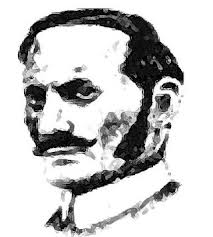
Another Mystery Solved? Jack The Ripper
Tuesday, September 2, 2014
Victimology: Ruth Cowing Hill
 |
| Thomas F. Cowing, Sr. |
Tuesday, August 12, 2014
Popping By To Say Hello
 |
| My mentor |
Thursday, July 24, 2014
The Austin, Texas Servant Girl Annihilator - Solved?
The excellent PBS series History Detectives makes a special investigation into one of American history's forgotten and most brutal serial murderers. The entire episode is available for free. The investigators make some great insight's into how crime was handled in the late 19th and early 20th century. This case is also a great example of what can happen when public pressure is applied to criminal investigations. Watch this show!
Thursday, December 20, 2012
Revisiting the Walker Case: Old Posts Never Die
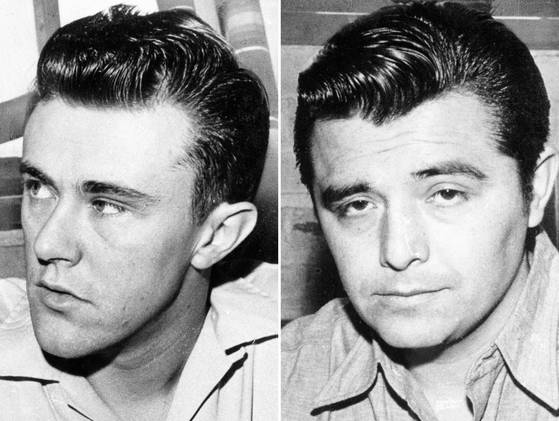 |
| Richard Hickock & Perry Smith |
In the comments of this post from 2008, "Lonnie" reminds me I never followed through on this. Now it seems investigators are giving this case another, another look. Now I have to admit, I haven't followed this case very carefully due to lack of information coming out. The last I heard, two of the original suspects were cleared by the DNA evidence. The primary suspect was a cousin of Mr. Walker's who was believed to have been having an affair at one time with Christine Walker. The affair likely didn't happen and the DNA cleared the suspect. The other man who was cleared was Cliff Walker's friend, Don McLeod the man who discovered the crime. The investigators still had about 20 suspects to test. With this latest news of the exhumation of Hickock and Smith for testing, I can only assume the other twenty people have been cleared as well. In all, 30 suspects have been ruled out. Now they are exhuming the bodies of the Hickock and Smith and personally, I think this is a high profile waste of time. Update: I was right; no match.
Friday, December 14, 2012
Post #100! Catching up with the Jordans

As the title says this is post number 100 for the old Inspector. Remember all the way back in 2008? I wrote my first post about the assault of Mrs. Bell Jordan, which occurred on the morning of October 31st, 1911, in Mount Pleasant, Iowa. This was just a day later then the two-week "schedule" the killer seemed to be keeping starting in Colorado Springs. I noted in that article that there had been a prowler along the tracks a day before and a few days after the assault on Mrs. Jordan. This prowler tried to enter a grocery store and was heard tapping on windows of other houses in the neighborhood around the railroad tracks. Whether or or not this was all the work of the same person is not known. At the time I was writing that post, I believed this was a botched attempt at murder by the Midwest Axeman. Today I do not. But first, a little bit more about the Jordans...
Thursday, December 6, 2012
Thursday, November 8, 2012
Wednesday, October 31, 2012
Descending from Evil: The Story of Herman Webster Mudgett
Descending from Evil: The Story of Herman Webster Mudgett:
 I found this article and interview very interesting. This is the kind of story I'm after with regard to the Midwest Axeman. To date I have found only a handful of descendants/relatives of victims and unfortunately, very few of them really know anything about the crimes. I'm still convinced, that somewhere in the U.S. is a person, or persons, with a family story of a kind of strange uncle or cousin who collected odd nick-knacks like old keys or earrings. Maybe a hair pin or broken key chain. A guy who was shy around women and restless at night, possibly pacing around the house. Anybody have a family story like that, from around the 1920's?
Wednesday, October 24, 2012
Other Axe Murders – The Axeman of New Orleans
 I have received a few emails asking about other, possibly
related crimes. The two most spoken
about are the Louisiana-Texas Axe murders and the Axeman of New Orleans. Now I have some thoughts on both of these
subjects but I’m going to address the
I have received a few emails asking about other, possibly
related crimes. The two most spoken
about are the Louisiana-Texas Axe murders and the Axeman of New Orleans. Now I have some thoughts on both of these
subjects but I’m going to address the
Subscribe to:
Posts (Atom)